The Exciting Cause
Marcus sits in traffic on a Tuesday, same route, same lane, same podcast half-listened-to. Somewhere behind his sternum there's a low hum that isn't boredom exactly — it's the suspicion that nothing he does this week wil
Part 1: The Exciting Cause — Concept
+5 XP on completion

Marcus sits in traffic on a Tuesday, same route, same lane, same podcast half-listened-to. Somewhere behind his sternum there's a low hum that isn't boredom exactly — it's the suspicion that nothing he does this week will matter to anyone.

Routine is survivable. What's harder is the creeping sense that you're a background extra in a story someone else is starring in. That feeling — the hunger for stakes, for urgency, for a plot you'd actually want to read — is one of the most common human aches on record.

Recruitment movements know this ache like a locksmith knows a tumbler. They don't sell ideology first — they sell drama. A villain, a countdown, a role only you can fill. Suddenly your Tuesday has stakes.

The mechanism is elegant and old: manufacture urgency, assign a nemesis, hand you a title. Now every group chat is a war room, every share button is a weapon, every morning you wake up mattering. The cause didn't fix your life — it replaced your life with a plot.

Marcus found a forum at 1 a.m. on a night when nothing in his apartment felt like it belonged to him. Within a week he had enemies he'd never met, allies who called him brother, and a reason to check his phone before his eyes were fully open. He wasn't radicalized by rage. He was radicalized by a plot that finally had a part for him.

Wanting to matter isn't a defect. It's the same impulse that builds hospitals and writes symphonies. The trick is noticing when someone else is packaging that impulse and selling it back to you with a villain attached. In Part 2, you'll practice spotting the drama-hook in real recruitment pitches — and mapping where your own hunger for stakes sits right now. See you there.
Part 2: The Exciting Cause — Practice
+10 XP on completion

Your brain is wired to crave a starring role in a story that matters — and recruiters know the audition schedule better than you do.

The mistake isn't wanting drama — it's never auditing where you're getting it. Most of us run on a drama deficit and never notice until someone hands us a pre-packaged epic with our name already on the marquee.
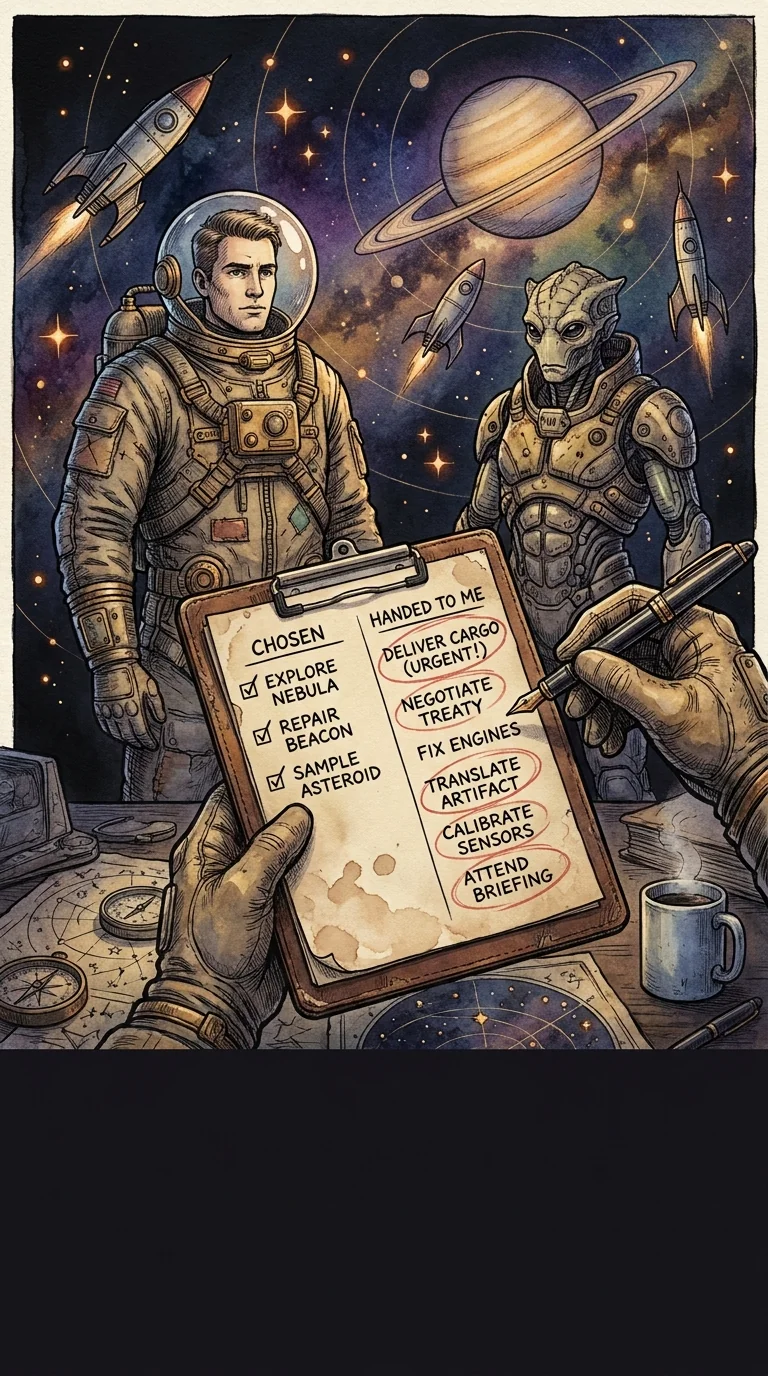
The technique is called the Drama Audit. You list everywhere you currently get stakes, urgency, and meaning — then you check whether those sources are ones you chose or ones that chose you.

Three columns. Column one: where do I feel like I matter right now? Column two: is this something I built, or something that recruited me? Column three: if it disappeared tomorrow, what would I actually lose? That third column is where the honest answers live.

Alex ran the audit on a Tuesday night. Half her "purpose" column traced back to a single online group she'd joined six months ago. The group gave her stakes, enemies, urgency — everything her day job didn't. Column three was harder: if it vanished, she'd lose the rush but not a single relationship she had before joining. That gap was worth noticing.

You deserve a life with real stakes in it. The Drama Audit doesn't take that away — it helps you tell the difference between a story you're writing and one someone wrote for you. That distinction is worth protecting.