Conspiracy Logic
You spend forty minutes debunking your cousin's theory with sourced data, clear logic, and genuine patience. He replies: "That's exactly what they want you to think."
Part 1: Conspiracy Logic — Concept
+5 XP on completion

You spend forty minutes debunking your cousin's theory with sourced data, clear logic, and genuine patience. He replies: "That's exactly what they want you to think."
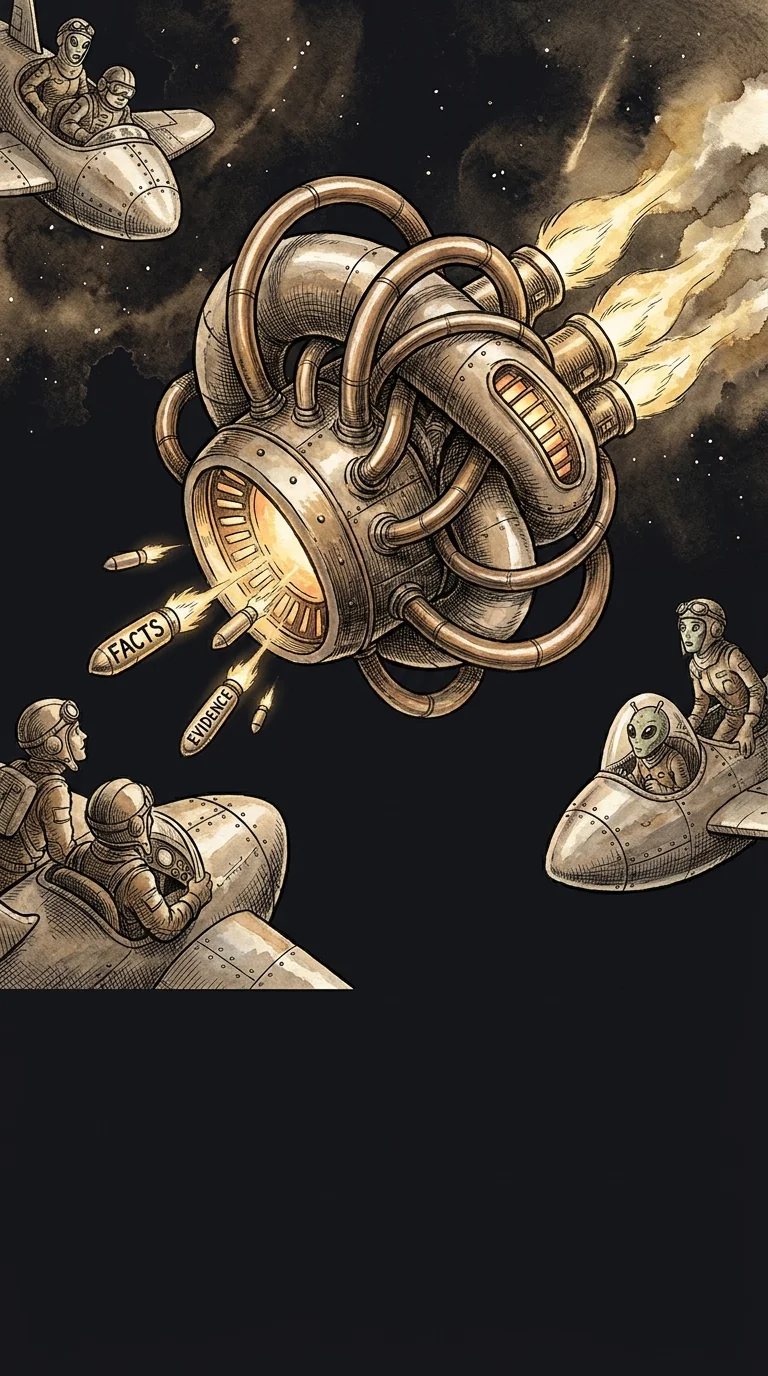
Your instinct is to find a better fact, a sharper argument, a more authoritative source. But the theory wasn't built to be argued with — it was built to absorb your counterarguments like fuel.
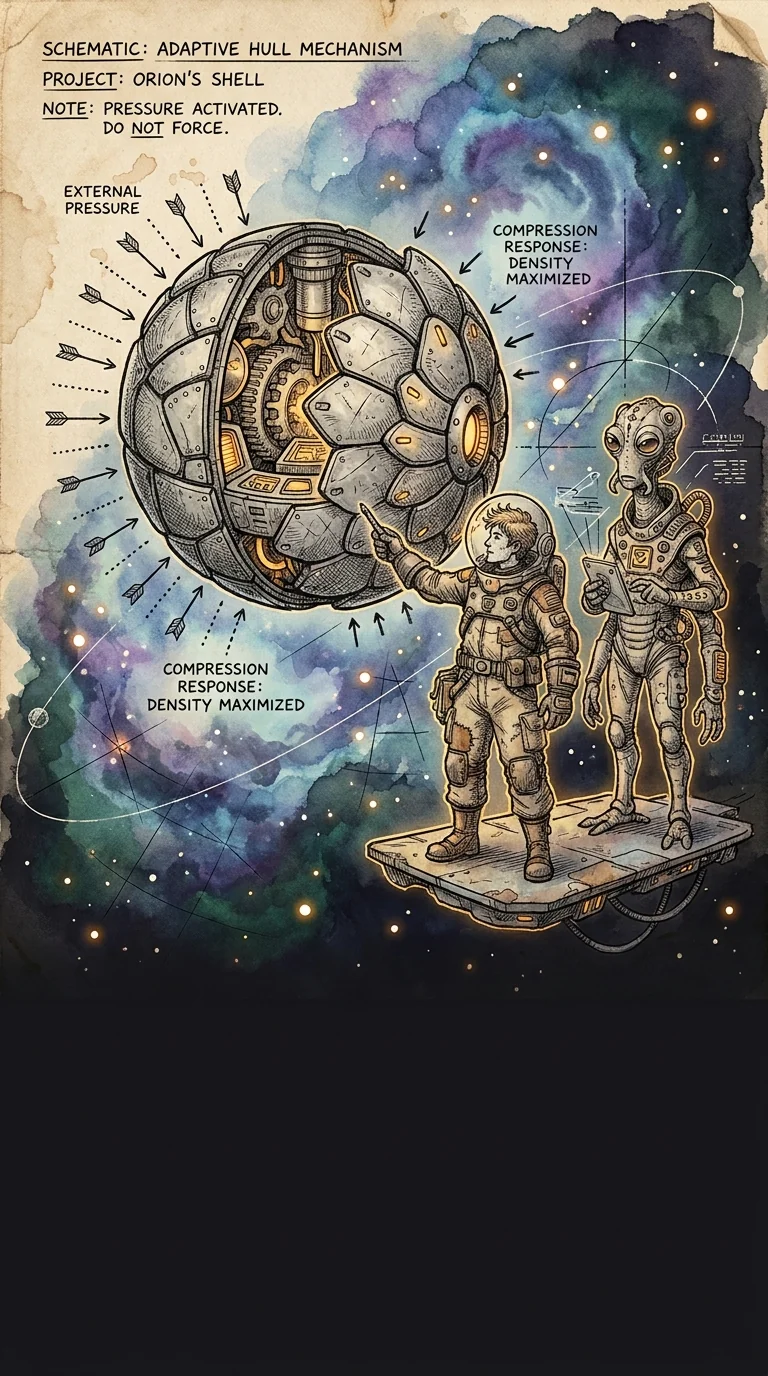
Here's what nobody admits: conspiracy theories aren't broken arguments. They're self-sealing arguments — designed so that every piece of contradictory evidence becomes proof the conspiracy is even bigger.

The structure has three moving parts. An unfalsifiable core claim — can't be tested, can't be disproved. A built-in explanation for missing evidence — "they" destroyed it, hid it, faked its absence. And a loyalty trap — doubting the theory means you've been compromised. Neat little closed loop, isn't it.

Marcus spent three weeks gathering evidence to convince a friend that a viral theory about signal-jamming satellites was fabricated. Every source he shared got the same reply: "Of course the official channels say that." It wasn't that his evidence was weak. It was that the theory had already pre-labeled all possible evidence as contaminated.

Knowing the structure matters more than memorizing the rebuttal. Once you can see the self-sealing loop, you stop feeding it facts and start asking better questions. In Part 2, you'll practice spotting the three structural pieces in real-world claims. See you there.
Part 2: Conspiracy Logic — Practice
+10 XP on completion

Conspiracy theories aren't built to be right — they're built to be unfalsifiable. So debunking individual claims is like plugging holes in a net.

Most fact-checks attack the content — this claim is false, that number is wrong. But the structure just absorbs the hit and spits out a new claim. You've seen this loop, probably from the inside.

The move that actually works: stop arguing the content and start mapping the structure. We call this the Falsifiability Audit — three questions that expose whether an idea can even be corrected.

Three questions. One: "What evidence would change your mind?" Two: "Does every counter-argument become more proof you're right?" Three: "Has the theory ever been wrong about anything?" If the answers are nothing, yes, and never — you're looking at a closed loop, not a theory.

Marcus tried this on himself. He'd been deep in a theory about rigged supply chains and realized he couldn't name a single piece of evidence that would make him reconsider. That silence told him more than any fact-check had.

You don't need to win an argument with a closed loop. You just need to recognize one — especially when it's running inside your own head. That recognition is a skill, and you're building it.