Scapegoating: The Oldest Trick in the Book
Four thousand years ago, a village gathered its failures, its plagues, its guilt — and loaded them onto a goat. Then they drove the goat into the desert and called it solved.
Part 1: Scapegoating: The Oldest Trick in the Book — Concept
+5 XP on completion

Four thousand years ago, a village gathered its failures, its plagues, its guilt — and loaded them onto a goat. Then they drove the goat into the desert and called it solved.
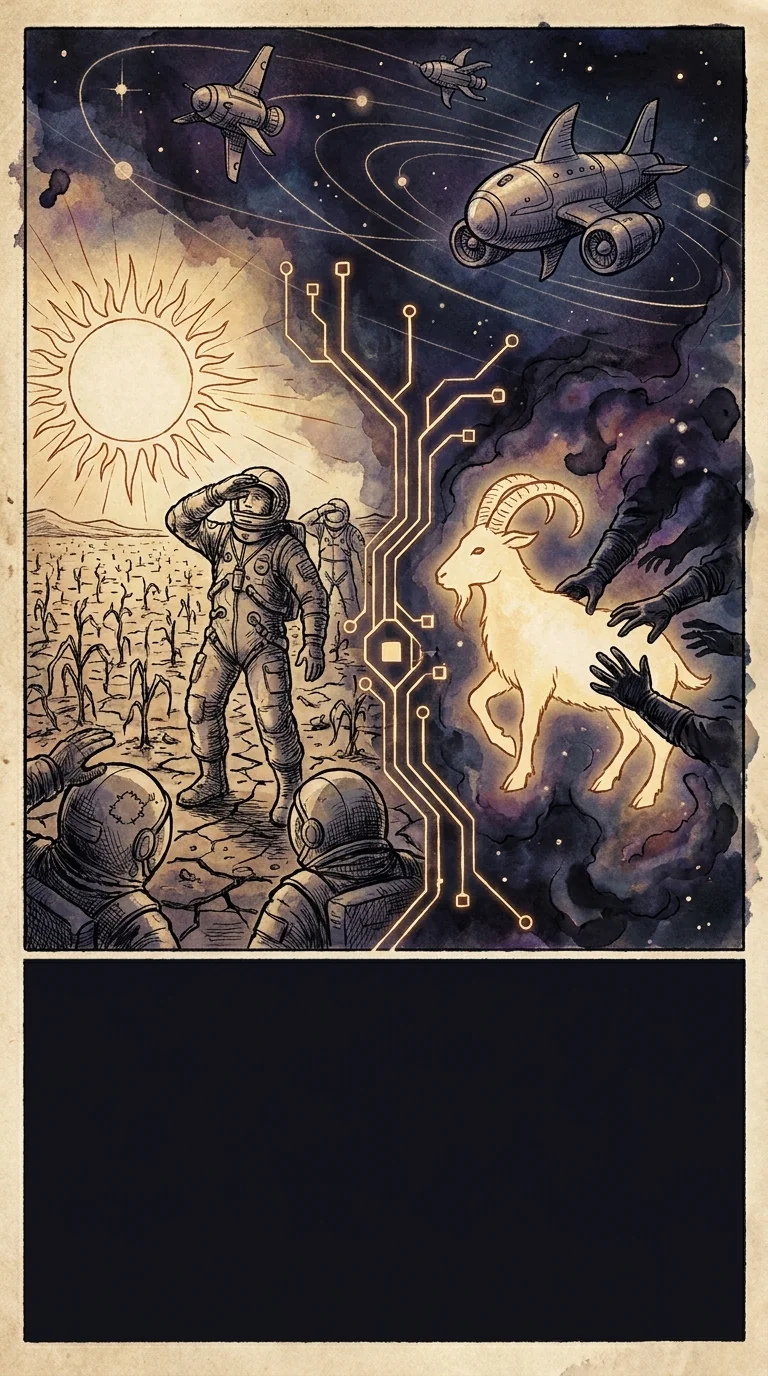
The goat never caused the drought. It didn't start the sickness or ruin the harvest. But blaming the goat felt better than admitting nobody had answers — and that shortcut is still running in your brain right now.

Here's what nobody admits: scapegoating isn't ignorance. It's efficiency. Your brain would rather assign a single villain than sit with the discomfort of a complicated, multi-cause problem that has no clean fix.

The mechanism is dead simple. Step one: name a threat people already feel. Step two: attach that threat to a specific group. Step three: offer a solution that conveniently involves punishing that group. The anxiety was real. The target was manufactured.

Marcus lost his factory job last spring. Within a week, someone online explained exactly who was to blame — not the merger, not the algorithm, not the quarterly earnings call. A specific group of people. And for a few dark weeks, that explanation felt like solid ground.

The ancient ritual gave a village permission to stop thinking. The modern version gives you the same permission — at someone else's expense. In Part 2, you'll practice spotting the three-step scapegoating pattern in real headlines and online posts. See you there.
Part 2: Scapegoating: The Oldest Trick in the Book — Practice
+10 XP on completion

Scapegoating works because blaming one group for a complex problem feels like solving it. Your brain rewards the shortcut with a hit of certainty — and that's the trap door.

When you hear "they're the reason everything is broken," your first instinct is to evaluate whether the claim is true. Wrong move. The real question is: why is this explanation so suspiciously simple?

Today's technique: the Blame Audit. When someone pins a big, systemic problem on a single group, you run three questions — not to win an argument, but to catch your own brain reaching for the easy answer.

Question one: What other causes am I ignoring? Question two: Would removing this group actually fix the problem? Question three: Who benefits from me blaming them instead of looking deeper? Write your answers down. Ink on paper slows the shortcut.

Marcus caught himself sharing a post that blamed new arrivals at his orbital settlement for the housing shortage. He ran the Blame Audit. Other causes: corporate landlords, zoning freezes, a burst pipeline that displaced three districts. Removing the newcomers wouldn't fix any of that. The post's author ran a campaign funded by the landlords. Marcus deleted the share.

You don't need to be right about every cause. You just need to refuse the first easy one. That refusal is a skill, and you practiced it today. It gets sharper every time you use it.